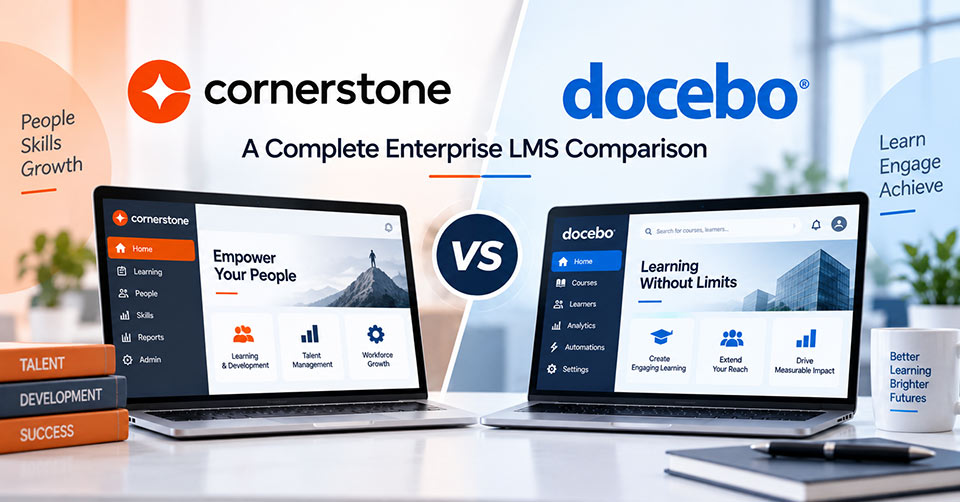
Cornerstone LMS is suited to large, regulated enterprises that require a unified talent management solution, while Docebo is geared toward organizations seeking a standalone, AI-powered learning platform with streamlined deployment. A Cornerstone vs Docebo comparison can help decision-makers understand which option better supports their training needs, business goals, and available resources.
Cornerstone vs Docebo: Head-to-Head LMS Comparison
Cornerstone vs Docebo comes down to differences in platform capabilities, flexibility, user experience, scalability, and pricing. The comparison below examines the factors that matter most when choosing an LMS for enterprise learning needs.
1. Platform Structure and Ecosystem
Cornerstone: It takes a broader talent management approach with Cornerstone Galaxy, bringing learning, recruiting, performance, and succession capabilities under one platform.
Docebo: Focuses on learning management, workforce skills, and learner engagement through its LMS and LXP capabilities, rather than covering the full talent management lifecycle.
2. Learner Experience and Engagement
Cornerstone: Built to handle diverse enterprise requirements, the platform includes extensive functionality for large organizations. Its more involved interface can take longer for learners and administrators to understand and use effectively.
Docebo: Emphasizes simplicity through an intuitive dashboard, clear navigation, and dependable mobile access. The approachable interface can reduce complexity and make learning workflows easier to adopt across user groups.
3. Compliance and Learning Requirements
Cornerstone: Supports enterprises in meeting compliance requirements across multiple regions and regulatory environments. Its functionality aligns well with regulated industries that require detailed reporting, certification records, and accessible documentation for audits.
Docebo: Supports compliance training, certifications, and automated learning requirements effectively. However, organizations with highly specialized regulatory processes may need additional configuration to accommodate specific workflows.
4. External and Extended Learning
Cornerstone: Supports external audiences such as partners, customers, and other groups, although external learning sits alongside its broader focus on internal talent management.
Docebo: Places greater emphasis on external learning through its multi-tenant architecture. Organizations can create separate, branded learning environments and support external training programs with e-commerce capabilities.
5. AI and Intelligent Learning
Cornerstone: Uses AI capabilities across skills intelligence, workforce planning, career development, and talent mobility. Its approach is closely connected to broader workforce management and long-term employee development.
Docebo: Puts AI capabilities into the hands of learning teams through features for creating materials, adapting learning experiences, managing content, and coaching users. As a result, organizations have more opportunities to apply AI throughout their training operations.
6. Administration and Customization
Cornerstone: Provides extensive configuration options for organizations with complex policies, processes, and enterprise requirements. However, managing that level of customization can require experienced administrators or implementation support.
Docebo: Takes a more streamlined approach to administration, allowing learning teams to configure courses, workflows, and other functions with less technical effort. Organizations evaluating Cornerstone vs Docebo may find this approach particularly useful when administrative resources are limited.
7. Integrations and Connectivity
Cornerstone: Connects effectively with other enterprise technologies, with added value for organizations using its broader talent management offerings. Its integration capabilities help bring HR systems and business applications together within a unified environment.
Docebo: Makes system connectivity more adaptable through its marketplace integrations and API capabilities. Businesses can connect the platform with their existing HR solutions, business tools, and productivity applications.
8. Learning Content and Course Creation
Cornerstone: Supports a broad learning content ecosystem alongside its main platform functionality. Organizations gain more flexibility in sourcing training resources and managing learning materials across large teams.
Docebo: Includes Docebo Creator for developing learning content within the platform. It supports faster creation of interactive training materials, microlearning resources, and localized content for different audiences.
9. Implementation and Time to Launch
Cornerstone: Enterprise implementations can require substantial planning, configuration, integration, and data migration. The overall rollout period can therefore extend across several months, particularly for complex organizations.
Docebo: Generally supports a faster implementation path, allowing organizations to move from setup to active learning programs sooner. This can help organizations begin delivering training and seeing value earlier.
10. Pricing and Overall Investment
Cornerstone: Costs are usually determined through a customized enterprise quote that reflects user count and organizational requirements. Businesses should also account for expenses related to deployment, integrations, configuration, and ongoing system management.
Docebo: Uses quote based pricing that can be structured around active users and selected capabilities. When comparing Cornerstone vs Docebo on cost, organizations should also consider additional expenses for advanced analytics, extended enterprise functionality, and other optional features.
Conclusion
Deciding between Cornerstone and Docebo learning management software comes down to how an enterprise plans to use learning technology. Cornerstone is suited to enterprises pursuing an integrated talent strategy and sophisticated administration. Docebo can be a better match for enterprises centered on learning agility, learner engagement, and extended training. Reviewing Cornerstone vs Docebo through these priorities can make the final decision more practical and informed.
Frequently Asked Questions (FAQs)
Is Docebo a big company?
Yes. Docebo is a global enterprise learning technology company with more than 900 employees and thousands of customers worldwide, making it a significant player in corporate learning.
What is Docebo used for?
Docebo is used to create, deliver, manage, and measure learning programs for employees, customers, partners, and other audiences through its AI powered learning platform.
Is Cornerstone an LMS system?
Yes. Cornerstone offers a scalable learning management system that helps organizations deliver, manage, and track training for employees, customers, and partners.
Which companies use Cornerstone LMS?
Companies using Cornerstone include Samsung, Nestlé, Novartis, Meta, BP, Intel, UPS, Hyatt, Philips, Dell, DHL Group, and American Express.
Who are the CEOs of Cornerstone and Docebo?
Cornerstone is led by CEO Himanshu Palsule, while Docebo is led by CEO and President Alessio Artuffo.