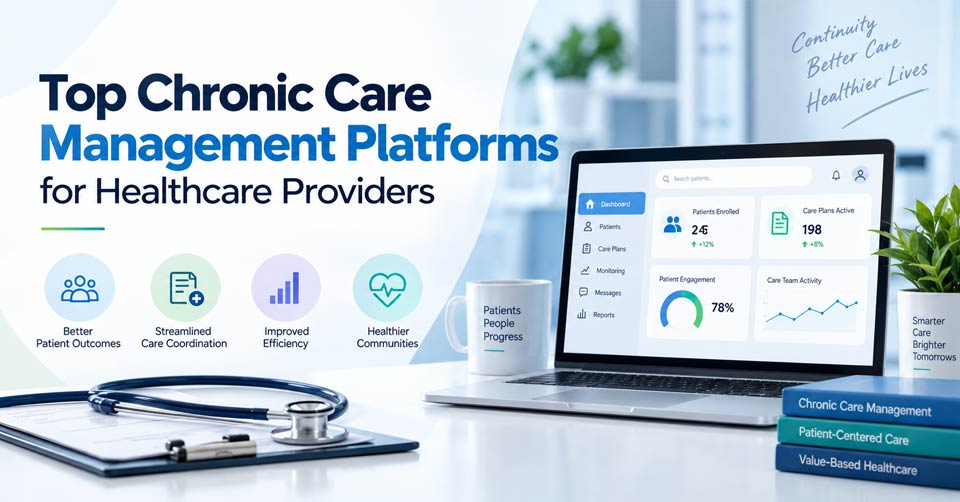
As the demand for better long-term patient care grows, healthcare providers are increasingly adopting Chronic Care Management Platforms to improve engagement, compliance, and care coordination. Many practices now prefer solutions integrated with EMR practice management software to simplify scheduling and operations, and a many also support value-based care by helping providers manage the complete patient journey through one connected system.
Why Chronic Care Management Platforms Have Become Essential
There is an evolving trend within the healthcare sector regarding the management of chronic diseases. Healthcare providers are not only concerned about providing services during clinic visits but also need to maintain regular communication with patients and monitor their progress outside the clinic.
It is because of this reason that chronic care management platforms have become indispensable for healthcare organizations dealing with diabetes, hypertension, COPD, heart disease, and mental illness.
Without centralized systems, practices often struggle with:
- Missed patient follow-ups
- Documentation inconsistencies
- Billing inefficiencies
- Care coordination gaps
- Administrative overload
- Poor visibility into patient progress
Modern CCM software addresses these issues through automation, reporting tools, patient engagement systems, and integrated workflow management.
At the same time, practices increasingly expect their CCM solution to function alongside broader emr practice management software infrastructure, allowing staff to move seamlessly between patient records, scheduling, care plans, billing, and communication tools.
1. athenaOne
Designed for Practices with Large Numbers of Chronic Patients
athenaOne is an integrated platform offering EHR, billing solutions, telehealth, and patient communications. The chronic care features offered by the software help with follow-up coordination, documentation, and Medicare compliance.
Features That Make It Stand Out
- Automatic patient engagement
- Claim management solutions
- Integration of telehealth Lab results monitoring
- Centralized patient communication
Why It’s Popular Among Providers
athenaOne is particularly popular among expanding practices due to its robust chronic care workflows and easy implementation.
2. ModMed
Focused on Chronic Care Workflows Based on Specialty Areas
Chronic care workflow in ModMed relies on specialty-based processes that can be adjusted depending on the provider’s needs.
Important Features
- Adjustable templates
- Workflows supported by artificial intelligence
- Mobile documentation
- Patient messaging platform
- Telehealth integration
What Sets It Apart from Others
Being a specialty-based solution, it performs particularly well when it comes to handling chronic patients with complex treatment processes.
3. Epic EMR
Coordination in Healthcare for Chronic Care Programs
Epic is one of the most popular names in healthcare solutions because of the ability to coordinate on an epic scale.
Key Features
- Populations Health Management
- Centralized patient files
- Automated reminders Interoperability
- Secure communication
What Makes It Special
It is the best choice for the management of chronic care programs that involve different departments or several physicians at the same time.
4. Tebra
Chronic Care Management Software Simplified
This software combines telemedicine, appointment scheduling, reputation management and chronic care coordination in one software.
Key Features
- Appointments
- Reputation management
- Chronic care reporting History keeping
- Templates customization
Why Doctors Choose It
This software is simple and easy to use for independent doctors and clinics that practice chronic care.
5. DrChrono
Chronic Care Management for Mobile Devices
This tool is designed to give flexibility and mobility to users as they are able to coordinate chronic care processes from anywhere.
Features
- Speech-to-text entry for notes
- Telehealth features
- Encryption and secure communication
- Mobility and mobile-friendly interface
- Integration with patient portal
Why It Was Included
The tool’s mobility makes it perfect for those who need rapid access to chronic care processes.
6. CureMD
Flexibility of Workflows and CCM Efficiency
It integrates a number of chronic care management functionalities into its workflows that help make them more efficient.
Features
- AI-powered medical scribing
- Revenue cycle management
- Unified dashboards
- Patient scheduling features
- Telehealth options
Why It Was Included
CureMD provides a good blend of workflow flexibility and CCM efficiency.
7. eClinicalWorks
Superior Population Health and Patient Engagement Tools
This EHR solution is popular amongst practices handling large patient volumes with extended care coordination needs.
Noteworthy Features
- Appointment reminders
- Population health reporting
- E-prescribing
- Integration with laboratory services
- Patient engagement features
Reasons for Adoption
It works efficiently in practices requiring consistent monitoring and regular patient follow-up.
8. Praxis
EMR Dynamic Document Management For LTC
Praxis EMR uses AI-based machine learning algorithms that learn from clinicians’ workflow patterns.
Main Strengths
- Individualized document management
- Centralized patient record-keeping
- Workflow learning
- Reminders automation
- Dynamic charting
Unique Selling Points
Praxis makes work easier through automated processes, offering a tool for individualized chronic care documentation.
9. Veradigm
Chronic Care Management Through Analytics
This system offers the combination of an EHR solution with analytics and patient engagement capabilities for chronic care visibility.
Key Features
- Customizable care plans
- Tools for secure communication
- Outcomes tracking Report dashboards
- E-prescription capabilities
Why Do Providers Adopt It
Analytics make the process of chronic care management easier through care gap identification.
10. Intergy EHR
Structured CCM Workflow Solutions for Growing Practices
Intergy EHR incorporates practice management, reporting, and chronic care coordination functionalities.
Key Features
- Population health management
- Patient portals
- Customizable templates
- Appointment management
- Documentation
- Medicare compliance
Reasons Why It Made the List
Intergy can be easily adopted by practices seeking to adopt structured CCM initiatives without much workflow change.
Healthcare Provider Features To Look Out For
Not all CCM platforms provide similar levels of workflow support. There are certain functionalities that healthcare providers need in order to benefit from their use.
- Workflow Automation and AI
Workflow automation and AI functionalities help minimize work involved.
- Patient Engagement
Patient engagement functionality helps increase long-term patient involvement in care plans.
- Billing and Compliance
Reimbursement tracking and documentation of care services provided is crucial for any CCM platform.
- Integration Capabilities
Integration capabilities will ensure that CCM platforms integrate seamlessly with other healthcare systems and applications.
- Scalability
Healthcare facilities require scalable solutions in order to cope with increased patient flow.
Conclusion
The Top Chronic Care Management Platforms in 2026 are changing the game when it comes to how medical professionals manage their patients’ care over time. Instead of being limited to being passive recording platforms, they have evolved to become active participants in patient engagement, operational optimization, billing, and collaboration.
Although larger-scale organizations will opt for bigger platforms like Epic and athenaOne, more agile healthcare providers might want to consider options like Praxis EMR, Tebra, and ModMed. The key is finding a platform that streamlines administrative processes while also making sure that you can provide consistent patient experiences.
Frequently Asked Questions (FAQs)
What are Chronic Care Management Platforms?
These are software systems designed to help providers manage long-term patient conditions through coordinated workflows, monitoring, communication, and billing support.
Why are CCM platforms important in 2026?
Healthcare organizations increasingly need tools that improve patient engagement, automate workflows, and support value-based care initiatives.
Can CCM platforms integrate with EMR systems?
Yes, most modern platforms integrate directly with emr practice management software for streamlined patient management.
Which CCM platform works best for small practices?
Tebra, Praxis EMR, and DrChrono are commonly preferred by smaller healthcare organizations.
What features matter most in CCM software?
Providers should prioritize automation, patient communication, interoperability, reporting, and compliance support.
Is AI becoming common in chronic care software?
Yes, AI-powered workflows, predictive analytics, and automated documentation are becoming standard capabilities in modern CCM platforms.